The Quiet Work of a Country Pantry
A country pantry is easier to use when staples are grouped by purpose and food needing attention stays visible, making everyday meal decisions simpler.
The common pantry mistake is to put groceries wherever a space happens to be free. A bag of oats disappears behind tins, the open jar of beans gets buried, and planning supper begins with rummaging rather than choosing. A country pantry works more quietly when staples are grouped by how they are used and a short list keeps food needing attention in view.
This is not a call for a particular diet or a picture-perfect larder. It is a way to make the food already in the house easier to notice and combine. Shelves, a cupboard, a cool utility room or a few sturdy boxes can all serve; the principle is to give familiar ingredients a clear place and give soon-to-be-used food a small amount of attention.
What is a country pantry for?
A country pantry is a working store of everyday ingredients, not necessarily a separate room. Its purpose is to keep useful foods visible, accessible and easy to connect to meals. Flour might sit with baking supplies, while oats, dried fruit and breakfast additions share another space.
That organisation matters because many meals begin with a simple question: what can go with this? A jar of tomatoes, dried pasta and a tin of fish may suggest one sort of supper; potatoes, onions and lentils another. When related staples are easy to see, the cook can start with what is present instead of imagining a meal and discovering that its main ingredients are missing.
Keep the arrangement proportionate to the household. A shelf used every day deserves an uncomplicated system; an occasional baking ingredient can live further away. There is no virtue in decanting every packet into matching jars if the original packaging is legible and fits the shelf.
How should pantry staples be grouped?
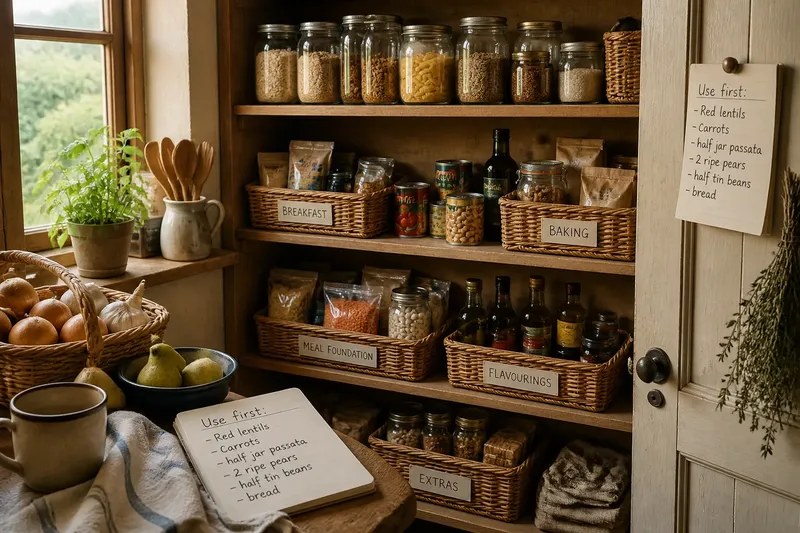
Group pantry staples by use rather than by appearance. A practical arrangement might have a breakfast area, a baking area, a meal-building area and a small group of condiments or additions. These are prompts, not rigid categories: put ingredients where they are easiest to recognise and reach.
- Breakfast: oats, cereal, dried fruit, tea and coffee.
- Baking: flour, sugar, raising agents, cocoa and baking paper.
- Meal foundations: rice, pasta, grains, pulses and tinned tomatoes.
- Flavourings: stock, oils, vinegar, spices and sauces.
- Useful extras: nuts, seeds, crackers and ingredients used for packed lunches.
Give open packets a consistent place, such as one basket for grains and another for baking odds and ends. This keeps small bags from slipping behind larger jars. If several people use the cupboard, labels on baskets can be more helpful than labels on every container. A washable marker can identify an opened packet or note when something was transferred, while the original label remains available for ingredient and storage information.
Arrange the most frequently used foods where they can be reached without moving other things. Put heavier jars on a stable lower shelf and keep delicate packets away from damp or heat. Follow the product label and the manufacturer’s storage directions, since suitable conditions vary by food and container.
How can a short use-first list help?
A use-first list is a brief note of foods that need attention soon, not a complete inventory. Keep it on a small pad, a chalkboard or a note fixed inside the pantry door. Add only the items that could otherwise be forgotten: an open packet of cooked grains in the fridge, a ripe pear, half a tin of beans moved to a covered container, or bread that is drying.
Write ingredients plainly and keep the list easy to edit. “Half a jar of passata” is more useful than “tomatoes”; “two ripe pears” offers a clearer prompt than “fruit”. Cross an item off when it is used, and remove anything that is no longer relevant. The list should stay short enough to scan while deciding what to cook.
Say a household has a nearly empty bag of red lentils, a few carrots and an opened carton of stock. The cook writes those items on the use-first note, then spots onions and a tin of tomatoes in the meal-foundation group. That combination may suggest a lentil soup; the visible note has brought the ingredients together without requiring a fixed menu or a special shopping system.
Keep chilled or perishable foods in the appropriate place rather than moving them into a dry pantry for convenience. The list can mention them while they remain stored safely. If an item’s condition is uncertain, use ordinary food-safety judgement and discard anything that appears spoiled rather than relying on a reminder note.
What belongs on the list?
Prioritise food that is open, ripe, leftover or easy to overlook. A pantry list can include shelf-stable ingredients as well as a prompt to check the fridge, but it should not become a second record of every purchase. Useful entries are specific enough to prompt an action and brief enough to read at a glance.
- Open packets that need sealing or using.
- Leftovers that can contribute to a meal.
- Produce that is ripe and ready to eat.
- A small amount remaining in a container.
- Ingredients set aside for a meal that has changed.
For foods with a date label, read the wording carefully and follow its meaning. A use-first note helps with visibility; it does not replace the label or make food safe beyond its appropriate storage. Keep the note focused on decisions, not on recording dates that are already clear on the packaging.
How does pantry planning fit meals?
Start with the ingredients calling for attention, then add a staple and a flavour. A remaining portion of rice can take a tin of beans and a sharp dressing; a jar of tomato sauce can meet pasta and a vegetable; flour and eggs may point towards a simple batter when those foods suit the household. These are flexible combinations, not dietary prescriptions.
It can help to think in loose roles: something filling, something with flavour, and an ingredient that adds texture or freshness. The pantry supplies some of these; the fridge, freezer, garden or local shop may supply the rest. A plan can stay as modest as “use the open beans with potatoes” rather than becoming a full weekly schedule.
There is little benefit in building an elaborate spreadsheet, transferring every ingredient to a jar, or writing a menu that leaves no room for changing appetites and plans. If a system takes longer to maintain than it saves in rummaging, simplify it. One grouping that makes sense and one visible note are enough to begin.
Which pantry questions come up?
Should every item be decanted?
No. Keep food in its original packaging when it is clear, sound and easy to store. Use a container when it helps contain spills or keep an opened packet together, while preserving the product information.
How often should the pantry be checked?
Check it when putting groceries away or deciding what to cook, rather than setting a demanding inspection routine. A brief glance can reveal an empty staple, an opened packet or an item worth adding to the use-first note.
What if the household shares the cupboard?
Agree on a few broad places and keep them consistent. A shared basket for breakfast food or baking supplies is easier to follow than a detailed system that only one person understands.
Does a pantry list need to become a meal plan?
No. It can simply remind you what is open or ready to use. If a list prompts one useful meal and then gets crossed off, it has done its work.
What makes the habit last?
Keep the arrangement forgiving. Pantry shelves change with the season, visitors, preserving and the rhythm of shopping; a useful system can shift with them. When a category becomes crowded, move the less-used items together rather than adding another layer of rules.
Once a week, or whenever it naturally suits the household, look over the short note and the most-used shelves while putting food away. Add a prompt only when it will help with a real decision. The quiet work of a country pantry is not constant tidying: it is making the next meal easier to see, one familiar ingredient at a time.